



Introduction
Understanding the origin and evolution of personal family names provides a fascinating window into global history, geography, and cultural migration patterns. Surnames often serve as living connections to ancestors, preserving clues about medieval landscapes, historical occupations, or regional origins. Among Central European family names, ruschek stands out as a distinctive and relatively rare surname with deep ties to German naming traditions.
- Introduction
- Overview of Key Name Characteristics
- Etymological Origins and Landscape Meanings
- Geographic Distribution across Central Europe
- Historical Figures and Documented References
- Spelling Variations and Archival Challenges
- Migration Patterns and International Reach
- Essential Genealogical Research Strategies
- Frequently Asked Questions
- Conclusion
While not as widespread as common surnames, its historical footprint offers rich material for genealogical research and etymological study. Uncovering the roots of this unique name involves examining geographic features, historical church logs, census entries, and international migration trends. This comprehensive guide explores the etymological origins, historical records, geographic distribution, and practical research methods related to the name.
Overview of Key Name Characteristics
| Category / Aspect | Primary Details | Historical Significance |
| Primary Origin | German / Central European | Rooted in Germanic language naming traditions |
| Etymological Classification | Topographic Surname | Describes geographical environment or landscape features |
| Linguistic Meaning | Living near a reed bed or marshy area | Identifies early family homes near wetlands or rivers |
| Primary Regions | Germany, Austria, Hungary | Reflects historic Central European trade and migration routes |
| Global Frequency | Low / Rare Surname | Offers highly focused genealogical tracing opportunities |
Etymological Origins and Landscape Meanings
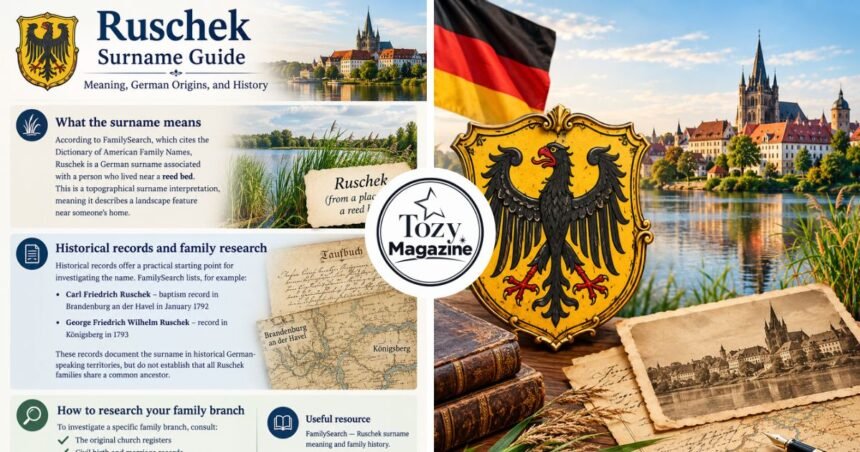
Linguistic analysis classifies ruschek as a classic topographic surname. Topographic naming conventions emerged during the Middle Ages across European communities to distinguish individuals based on the physical environment surrounding their homes. Published etymological interpretations connect the root word to German landscape terms describing a reed bed, marshy terrain, or wet land adjacent to rivers and ponds. An early ancestor residing near a local reed bed would be identified by neighbors using the surrounding natural landscape. Over generations, this descriptive identifier solidified into a hereditary family title passed down through children.
Geographic Distribution across Central Europe
Historical distribution records demonstrate that ruschek is primarily concentrated in Central European regions, particularly throughout Germany. Archival research also indicates presence in neighboring countries such as Austria and Hungary, reflecting the fluid borders and historical population movements within the former Austro-Hungarian Empire and German territories. Due to political shifts, economic changes, and military conflicts, families bearing the title relocated across European boundaries over the centuries. Consequently, finding family branches across different Central European countries remains a standard occurrence when conducting ancestral research.
Historical Figures and Documented References
Archival records preserve scattered historical mentions of individuals named ruschek across various professions. In religious and literary history, Antal Ruschek (1851–1914) was a Hungarian Catholic clergyman and writer whose published sermons and theological works remain indexed in European library catalogs. In modern athletic history, German football player Wolfgang Ruschek played in professional league matches during the late 1970s. These documented individuals reflect the diverse paths taken by members carrying the name across different eras and locations, though a shared last name does not automatically indicate direct genetic connection between separate branches.
Spelling Variations and Archival Challenges
Tracing historical family trees associated with ruschek requires accounting for phonetic spelling variations across official registers. Before standardized spelling laws were established, parish priests, census clerks, and immigration officers transcribed names based on local ear and regional dialect pronunciations. Researchers frequently encounter historical variants such as Ruscheck, Roschek, or Ruschke in church registers, shipping passenger lists, and civil records. Documenting each spelling variation alongside confirmed dates and locations helps genealogists avoid losing track of ancestral connections due to clerical transcription errors.
Migration Patterns and International Reach
Like many European family names, migration during the nineteenth and twentieth centuries carried ruschek far beyond its original Central European homeland. Historical shipping manifests and naturalization logs record individuals embarking for North America, Great Britain, and other global destinations seeking economic opportunities. For example, census listings in the United Kingdom document individuals bearing the name living in urban centers like London by the turn of the twentieth century. Studying these transatlantic passenger logs helps modern descendants trace their family lineage back to specific European towns of origin.
Essential Genealogical Research Strategies
Investigating ancestral branches linked to ruschek requires a systematic approach grounded in primary documentary evidence. Professional genealogists recommend starting with home records, such as family Bibles, old letters, and official certificates, before moving to digital databases. Cross-referencing civil registration entries, parish baptism logs, census returns, and military records helps establish verified links between successive generations. Combining traditional paper archives with modern DNA testing can provide supportive leads, provided genetic results are interpreted carefully alongside documented family trees.
Frequently Asked Questions
What does the surname ruschek mean?
It is a German topographic surname historically given to someone living near a reed bed, wetland, or marshy area.
Is ruschek a common family name?
No, it is considered a rare surname, with a low global frequency primarily found in Germany and Central Europe.
Which countries have the highest occurrence of the name?
Historical and surname distribution records place the highest concentration in Germany, Austria, and Hungary.
What historical spelling variations might appear in records?
Common historical variants in church and census logs include Ruscheck, Roschek, and Ruschke.
How can I begin researching my family connection to this name?
Start by gathering home documents, identifying confirmed ancestors, and searching church registers, birth logs, and passenger manifests.
Conclusion
The exploration of ruschek demonstrates how a single family name can bridge language, geography, and generations. From its linguistic origins as a topographic description for living near a reed bed to its spread across Central Europe and global migration destinations, the name holds a rich historical identity.
Although individuals bearing the name today are scattered across different countries and professions, disciplined research in historical archives allows descendants to uncover their specific ancestral roots. By combining etymological clues with primary documentary records, genealogists can build an accurate, evidence-backed picture of their family heritage. Preserving these historical findings ensures that the unique legacy behind the title remains accessible for future generations.